Small on Purpose: Why the Smartest Indie Devs Are Saying No to Growth
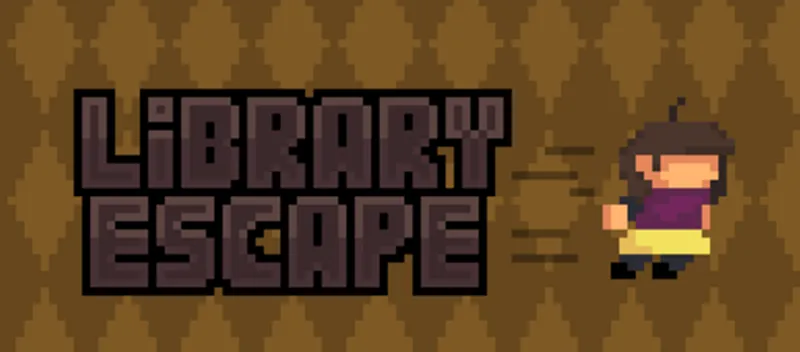
Photo: BreadProgrammer, CC BY-SA 4.0, via Wikimedia Commons
There's a version of success that every indie developer is supposed to want. Steam front page. A million downloads. A Reddit thread that blows up overnight. Coverage on the big outlets. The whole thing.
But a quiet and increasingly confident corner of the indie world is pushing back on that idea — hard. These are developers who've looked at the mainstream playbook and decided, deliberately and without apology, that it's not for them. They're not failing to find a big audience. They're refusing one.
And somehow, it's working.
The Math That Doesn't Add Up (Until It Does)
Conventional wisdom says more players equals more revenue equals more sustainability. That logic isn't wrong, exactly — but it assumes growth is free, which it absolutely isn't.
Scaling a game means scaling everything around it. Customer support tickets multiply. Community management becomes a full-time job, then a team. Balancing decisions get made for the median player rather than the passionate one. Marketing spend balloons. And the game itself — that original, weird, specific thing you made — starts bending toward whatever is most palatable to the widest possible audience.
Some developers have done the math differently. If 4,000 players each spend $25 on your game and another $15 on DLC or merch or a Patreon tier, that's $160,000 in gross revenue from a community small enough to fit in a mid-sized concert venue. If those same 4,000 players are deeply engaged — posting guides, making fan art, bringing in friends, sticking around for years — the lifetime value of that community starts looking a lot more interesting than a flash-in-the-pan launch with 200,000 downloads and a 40% refund rate.
This is the niche economy. And it runs on loyalty, not volume.
What "Deeply Engaged" Actually Looks Like
It's easy to throw around phrases like "passionate community" without meaning much. So let's get specific about what deep engagement actually produces.
Games built around niche visions tend to attract players who feel like they've found something made specifically for them. That feeling of recognition — of being seen by a piece of media — is powerful. It turns players into advocates. They don't just play the game; they explain it to people. They defend it in comment sections. They make YouTube videos that double as love letters. They show up on launch day for the sequel without needing to be reminded.
Developers who've cultivated this kind of community describe it less like a customer base and more like a creative partnership. Player feedback isn't noise to be filtered — it's signal from people who genuinely understand what the game is trying to do. That changes the whole dynamic of development.
There's also a stability argument here that doesn't get enough attention. A community of 5,000 true believers is far more resilient than a casual audience of 500,000. When the algorithm stops promoting you, when a bigger game launches the same week, when the discourse moves on — the true believers stay. They were never there because you were trending. They were there because you made something they couldn't find anywhere else.
The Refusal as a Creative Statement
Some of the most interesting niche games aren't just small because their audience is small. They're small by design — because the thing that makes them work would break if you tried to sand off the edges for mass appeal.
Think about the kinds of games that thrive in this space. Deeply systemic management sims with near-vertical learning curves. Narrative games that deal with grief or mental illness without offering resolution. Multiplayer experiences built around social dynamics so specific they feel almost anthropological. Games that require patience, or discomfort, or a tolerance for ambiguity that a mainstream audience simply wouldn't sign up for.
These games aren't niche because their developers lacked ambition. They're niche because their ambition pointed somewhere specific — and following it meant accepting that not everyone would come along.
That refusal is a creative statement. It says: this game is for someone, not everyone. And the someone it's for tends to feel that in their bones.
The Platforms Making This Possible
None of this would be viable without the infrastructure that now exists to support it. Patreon, itch.io, Discord, Kickstarter, Ko-fi — the ecosystem around small creative projects has matured to the point where a developer with a few thousand dedicated supporters can actually build a sustainable operation.
Discord deserves particular credit here. For niche game communities, a well-run Discord server functions as something between a support forum, a focus group, a fan club, and a second home. Developers who are active in their own servers describe a kind of feedback loop that's almost impossible to replicate at scale — direct, honest, and grounded in a shared understanding of what the game is actually trying to be.
itch.io has quietly become one of the most important platforms for this model, partly because it's built around the idea that weird, small, experimental things deserve to exist and find their people. The platform's pay-what-you-want mechanics and bundle ecosystem have helped countless niche games find communities that Steam's algorithm would never have surfaced them to.
Redefining What "Making It" Means
The indie gaming world has spent years borrowing its definition of success from an industry that operates at a completely different scale. A game that sells 10,000 copies gets called a failure in the same breath that a studio with 200 employees calls it a rounding error. Those aren't the same thing, and treating them like they are distorts everything.
The developers leaning into the niche economy are implicitly — and sometimes explicitly — rejecting that framework. They're measuring success in sustainability, in creative integrity, in the depth of the relationships they've built with the people who play their games. Some of them are making a comfortable living. Some are making enough to keep going. All of them are making something they actually believe in.
That's not a consolation prize. For a lot of people, that's the whole point.
At Zero Radius Games, we spend a lot of time thinking about what it means to play beyond the edge of what's expected — and the developers building sustainable lives around small, uncompromising visions are doing exactly that. They're not waiting for permission to matter. They found their radius and committed to it completely.
Maybe that's the most radical thing you can do in a industry that never stops telling you to scale up.